Economic immobility is a large and complex challenge that demands collective effort. That’s why one of the Student Upward Mobility Initiative’s (SUMI’s) core goals is to help build a stronger, more connected field of research on how PK–12 education shapes students’ long-term upward mobility.
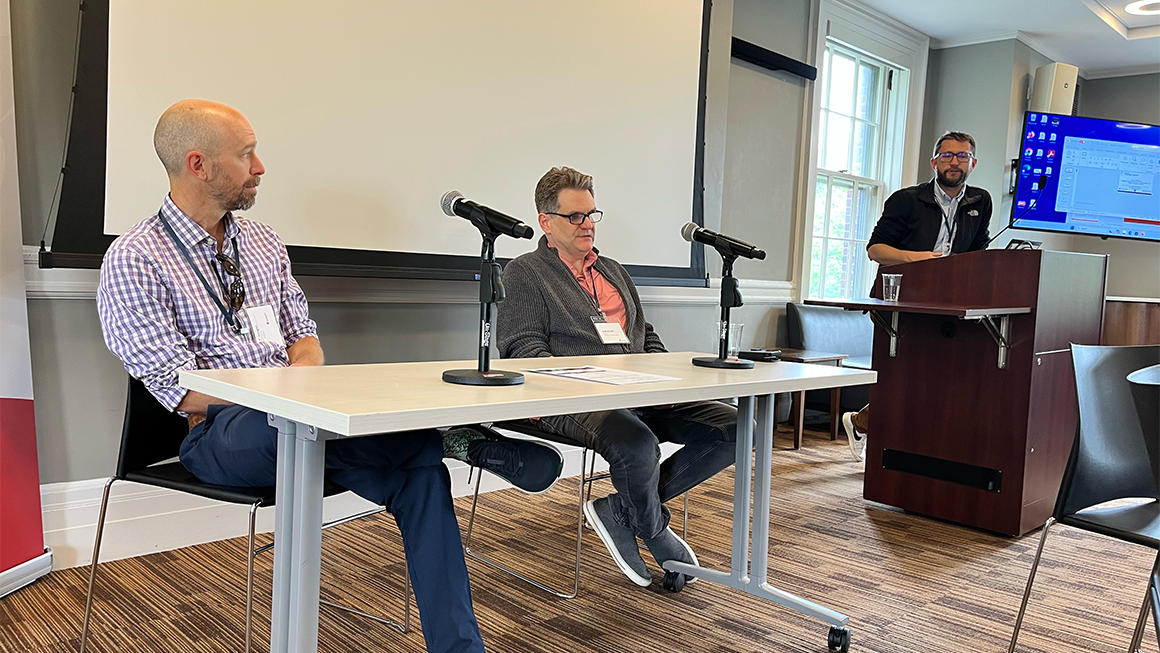
So it was with a certain amount of pride that I watched SUMI grantees Jesse Bruhn and Viviana Rodriguez bring together about 40 researchers from education, economics, psychometrics, policy analysis, and computer science to discuss new approaches to educational measurement.
Hosted by the Annenberg Institute at Brown University, the workshop spotlighted an important reality: Many researchers studying upward mobility are trying to answer similar questions, but they often approach them through very different intellectual traditions.
Economists of education, for example, have historically focused on students’ outcomes as adults, like wages and labor market returns. Psychometricians typically focus on students’ test scores. Education researchers tend to focus on how school contexts and instructional processes affect students. And data scientists and computer scientists are increasingly using new computational approaches and digital data to measures student skills and competencies.
Too often, these conversations happen in parallel rather than together. The Annenberg event showed that intentionally working across disciplines can be a rich source of innovation and problem solving.
During the workshop, participants had the time and structure to engage with one another’s work. For each paper that was presented, the organizers selected discussants that weren’t from the author’s field. For example, a psychometrician discussed an economist’s work, and an economist reflected on a computer scientist’s study.
Several attendees remarked that it was among the most useful convenings they had attended because it allowed people to move beyond surface-level commentary and deeply interrogate ideas together.
One recurring topic of conversation was the risk of overrelying on standardized test scores because they are readily available and familiar. Education research has long struggled with what some participants described as a “streetlight problem”: focusing on measures that are easy to observe rather than necessarily the ones that matter most.
Presenters challenged themselves to consider how to tap into the depths of existing data to measure not only academic achievement but persistence, collaboration, problem solving, self-regulation, and relationship building (e.g., this SUMI-funded project Viviana presented).
At the same time, psychometricians raised important cautions about repurposing measures beyond their intended uses and emphasized that validity depends heavily on one’s goals.
To resolve this tension, attendees imagined supplementing administrative data with more bespoke data. Some pointed to the California CORE districts’ long-standing efforts to add social-emotional learning data to their administrative files. Others discussed portfolio-based assessments (like those Massachusetts is exploring), digital trace data, and data protection innovations that enable cross-system data connection to strengthen wide but shallow administrative data.
Another recurring challenge participants brought up was the relationship between research complexity and policy usefulness. Researchers tend to prioritize nuance and heterogeneity, while policymakers and practitioners frequently need clear, real-time, practical guidance. Like the Annenberg Institute and others, SUMI aims to bridge this gap by creating accessible research summaries and developing resources to help researchers identify and connect to the active policy and practice implications of their work.
Although the event is over, the momentum of the day carries on. SUMI is looking forward to the research synthesis the organizers will put together based on the discussions and new research directions raised at the event. It is this kind of cross-disciplinary field strategy that SUMI seeks to build on as we think about our future work: the research we support, the field we aim to strengthen, and the impact on schools and students we hope to make.