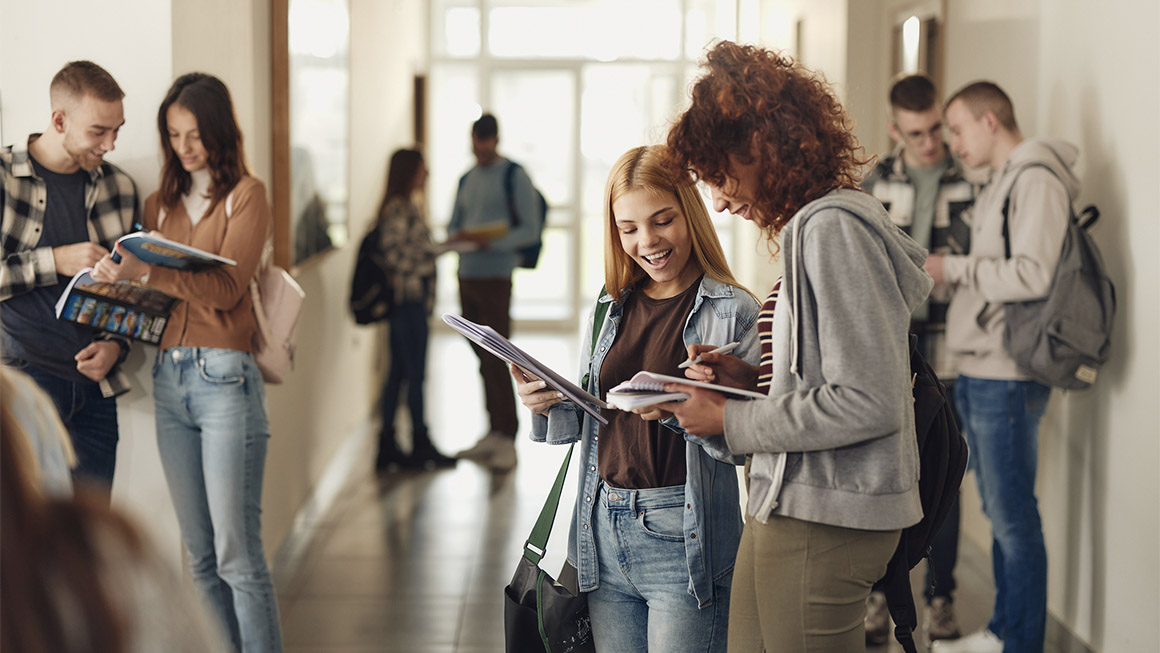
We are excited to introduce the 13 research teams selected for the Student Upward Mobility Initiative’s (SUMI’s) 2026 cohort. We awarded $4 million in grants to expand insights on high school–based skills that drive economic mobility, how those skills develop from middle to high school, and opportunities to better measure the skills students need to thrive in life.
The grantees were selected from a highly competitive pool of more than 215 letters of inquiry. Grantees represent a diverse group of scholars at all career stages. Teams include economists, developmental psychologists, cognitive scientists, and practitioners, reflecting the importance and cross-disciplinary nature of the education-to-economic-mobility research space.
This cohort will build on SUMI’s first cohort of grantees (2024–26), who are currently delivering results on which PK–12 skills drive future economic mobility among students and how to better measure these skills. The new cohort will also expand the number of states captured in SUMI grantee research.
A New Chapter of Research and Development
Teams will deliver rigorous and novel findings to inform intervention design, public policies, and measurement approaches that redesign the high school experience to better support skill acquisition and ensure students leave high school with the skills needed for success.
Over the next two years, teams will explore which high school skills matter for success, how these develop in middle and high school, and how we can measure in-demand skills at scale. All teams will examine how context factors into skill development, with a focus on analyzing differences by student group. Some teams will also investigate the specific roles that school organization and practice play in these relationships.
Four themes emerge among this cohort:
1. What career-focused skills lead to upward mobility, and why?
Amid growing investment in the approach, policymakers are increasingly aware that not every credential or career and technical education (CTE) pathway, broadly defined, leads to future student success.
Reflecting this, several SUMI cohort 1 grantees are examining skills built through CTE pathways, specialized high schools, industry-recognized credentials, and dual enrollment and how those skills relate to mobility outcomes. Using data from New York, Michigan, and Texas, three teams in cohort 2 will augment this research, helping to provide policymakers and education leaders clearer information about what pathways lead to success and why.
A novel cohort 2 study will engage directly with the high school redesign movement, where student projects are increasingly common. It will assess students’ AI literacy through their interactions during a subject-specific capstone project, capturing fluency with AI in ways that reflect skills needed for college, work, and life. As schools rapidly implement AI tools, this work offers timely tools to ensure students graduate from high school as competent AI users.
2. What can data sources (e.g., grades and transcripts) that are familiar to teachers, parents, and administrators tell us about students’ skills that drive adult outcomes?
The repurposing of existing data for new or enhanced measurement purposes has become a research niche for SUMI because of the topic’s combination of skill focus and scalability. This cohort will continue in that vein.
One cohort 2 study will explore whether a skill-based interpretation of the courses and grades on high school transcripts can generate a new measure of transcript strength, similar to how college admissions officers assess students’ preparation. Another team will use grades, test scores, and future outcome data from students in Virginia to better understand the value of grades as a predictor of future economic mobility, particularly in the context of grade inflation.
Early insights from cohort 1 highlight the importance of math skills to students’ later upward mobility. A cohort 2 research team will build on this early evidence and use SAT, ACT, Advanced Placement, and International Baccalaureate math exam data to identify which specific math subskills—especially those with broad applicability—drive economic mobility.
3. We know certain skills matter for later mobility. But when and how do they develop?
Understanding what skills students need by the end of high school is critical for redesigning school so students can access multiple pathways to future mobility. Yet knowing which skills matter is insufficient without understanding when and how they develop and which school structures and conditions support that development.
Three teams in cohort 2 will examine these developmental trajectories across middle and high school, offering the field deeper insight into when and how we can intervene most effectively to build crucial skills and how skills develop together.
This includes projects based in North Carolina and California that will explore how social and emotional competencies develop, how they connect to early mobility outcomes, and how conditions such as social capital shape these trajectories. These teams will also study how skills operate independently and collectively.
The third project will build substantially upon a project funded in the first cohort focused on students in Texas. The team will use item-level Texas assessment data to examine academic and cognitive skills that boost economic mobility, determine when skill-based disparities emerge, and highlight opportunities to disrupt those gaps.
4. How can researchers meet schools where they are and harness technologies they’re already using to measure students’ skills?
Rather than create entirely new assessment systems, several cohort 2 grantees will harness tools schools are already using to meet the field’s call for success-ready competencies. These innovative and scalable measurement approaches will use technology to build a richer arsenal of skill-based data.
One team will use unique data from major AI platforms, including school-specific and broader interaction data, to examine whether latent interaction patterns can be used to measure skills employers value, such as metacognition, problem solving, and persistence.
Another project—the first focused on out-of-school contexts—uses student reflections to test whether AI methods can measure self-management, relationship skills, and self-awareness as well as validated paper-and-pencil assessments.
Building on cohort 1 and 2 studies that examine which math skills drive economic mobility, one team will shed light on math skill acquisition. The team will harness classroom audio recordings—which have become increasingly common—to measure students’ math reasoning skills and provide immediate feedback to teachers, supporting instructional improvement in the short term.
The research topics and methods featured in this year’s cohort reflect how AI is rapidly transforming learning environments. Some grantees will harness AI as a novel way to measure skills as a methodological tool and as a form of data collection. Other grantees will investigate AI fluency as a skill unto itself. These creative and forward-facing proposals exemplify the cutting-edge research and evidence all grantees in our second cohort will produce.
As affirmed by a growing list of SUMI funders, the studies in SUMI’s new cohort, coupled with those funded in the first cohort, will produce important and novel findings that will both substantially advance the research field and offer timely insights that can guide policy through high school redesign, assessment design, career-connected learning and CTE, competency-based education, and AI’s role in education.
Learn more about SUMI’s current and previous grantees here.
About SUMI
The initiative is led by the Urban Institute, a nonprofit research organization founded on one simple idea: To improve lives and strengthen communities, we need practices and policies that work. SUMI is a sponsored project of Rockefeller Philanthropy Advisors.
SUMI is currently funded by the Walton Family Foundation, the Bill & Melinda Gates Foundation, Overdeck Family Foundation, and The Wallace Foundation. SUMI has also been funded by the Joyce Foundation.